SUEN XUE
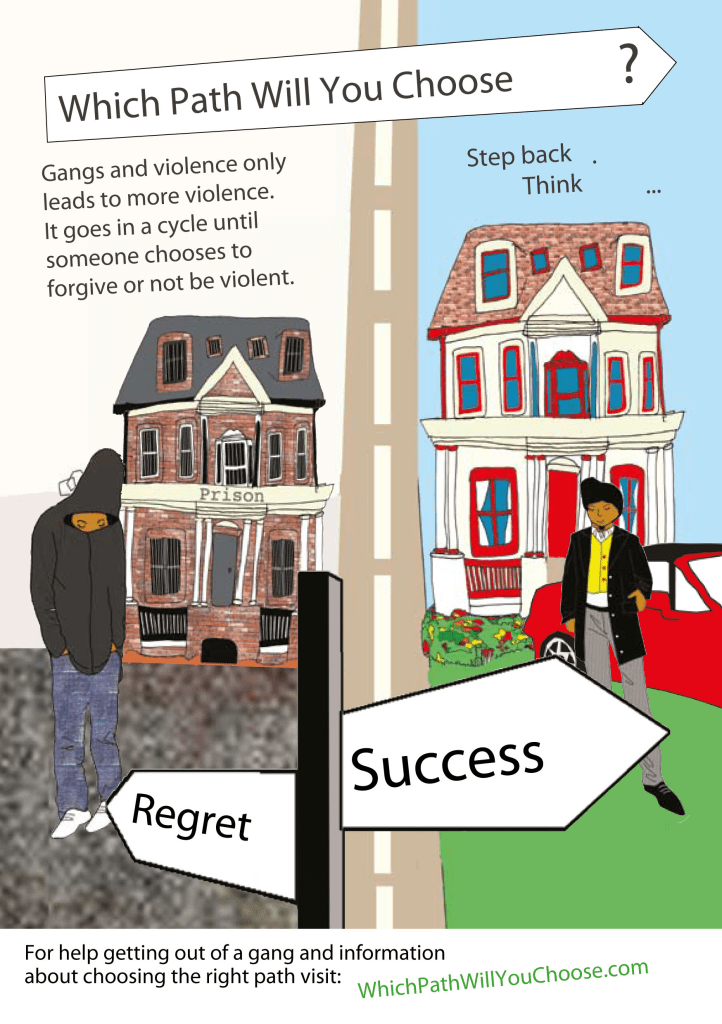
When people talk about youth crime in the UK, their first impression is often of “knife-wielding teens” and “gang violence” in the news. They instinctively label these young people as “rebellious” or “morally corrupt,” assuming they have chosen a life of crime out of sheer bad character. But if we look beyond the surface violence and chaos, a far harsher truth emerges: most of these so-called “problem youths” are victims trapped by structural social injustice. Their crimes are less acts of malice and more desperate acts of resistance against impossible living conditions.
A Paradox: Falling Crime Rates, Rising Violence
Let us start with the most striking observation: in recent years, the number of first-time youth offenders in England and Wales has been declining. Yet violent crime — especially knife crime — has continued to surge. Over the past decade, knife-related offenses involving young people have risen by 64%, and a staggering 83% of youth homicides are committed with bladed weapons. Why this paradox of “overall decline but escalating violence”? The answer lies in the invisible “structural chains” that bind these young people.
Three Structural Chains: The Invisible Prisons Trapping Young People
(1) Chain One: A Gutted Social Safety Net, Cutting Off Vulnerable Youths’ Escape Routes
The first chain is a dismantled social safety net, leaving vulnerable young people with no way out. As reported by The Guardian (2018), the UK’s austerity policies, implemented since 2010, have hit children the hardest. In just a few years, funding for youth services was slashed by 62%—a cut of £737 million. Between 2012 and 2016, 600 youth centers closed, 3,500 youth workers lost their jobs, and 140,000 youth places disappeared. A new analysis by the House of Commons Library shows that real spending on universal youth services has fallen by 52% since 2012. The very places that once offered after-school activities, guidance, mental health support, and skills training—safe havens for young people—have vanished one by one.
Imagine a child from a poor family: no one at home after school, no community center to go to, only street gangs and idle adults around. With no positive role models, no chance to learn skills, and no sense of security, they may carry a knife or join a gang simply to survive. It is not that they want to be bad; they have no other choice. Austerity has cut not just budgets, but these young people’s futures—the last barrier keeping them away from violence.
(2) Chain Two: Educational Class Entrenchment, Pushing Children Off the Right Path
The second chain is “class entrenchment” in education, pushing countless children toward despair. Britain’s education system, seemingly fair, is rife with stratification and exclusion. Children from wealthy families attend private schools with the best resources and teachers, while those from poor backgrounds struggle in underfunded state schools, where even basic safety cannot be guaranteed.
Worse still, children who are mischievous, rebellious, from ethnic minorities, or in foster care face a much higher risk of permanent exclusion from school. Expulsion robs them not only of education but also of their path to social integration. Data shows that excluded students are twice as likely to commit serious violent crimes later in life. When a child feels disrespected, alienated, or bullied at school, they may turn hostile toward society and use violence as an outlet.
(3) Chain Three: Racial Injustice in the Justice System, Making Life Harder for Ethnic Minority Youths
The third chain is racial discrimination embedded in the justice system, compounding the suffering of ethnic minority young people. In the UK, Black teenagers are over four times more likely to be arrested than white teens. Ethnic minorities make up 52% of the youth detention population, yet account for only 18% of the total population. This is not because ethnic minority children are “more prone to crime”; it is because they are labeled “dangerous” by the system from the start.
They are more likely to be stopped and searched, more likely to be prosecuted, less likely to receive non-custodial sentences, and if convicted, given longer sentences. This implicit racial bias permeates every stage of the justice process, leaving many ethnic minority young people feeling that no matter what they do, they will never be treated fairly. When justice is denied and hope is extinguished, some young people give up and turn to crime as a form of resistance against this injustice.
A Real Case: A 14-Year-Old Trapped by Chains, Not Born “Bad”
The story of Nunez is a microcosm of countless trapped young people in Britain, as documented in The Guardian. It vividly illustrates the plight of vulnerable youth. He lives in the West Midlands, England—an area with the highest per capita knife-crime rate in England and Wales, where gang rivalries between groups like the “Burger Bar Boys” and “Johnson Crew” are constant, and violence is endemic. Young people there grow up in a permanent state of fear.
Nunez began carrying a knife at age 14 and kept it for five years. His only motive was self-protection. Few realize that beneath this knife-carrying exterior lay not malice, but profound fear. In an interview, he said he never intended to stab anyone; he carried a knife because he felt utterly unsafe in his community: “When I’m waiting at the bus stop, gang members pull up and ask which gang I’m in. As a young person, what do you do when no one is there to protect you?” This raw confession speaks to the shared trauma of young people in such areas.
Nunez’s upbringing embodies all three structural chains: his neighborhood is a “trap” of high poverty and crime; local youth centers were closed due to austerity, leaving him to wander the streets after school surrounded by gangs; he received poor education with no positive guidance and little safety at school; and as an ethnic minority, he experienced systemic racial bias from an early age, feeling he would be suspected even if he stayed out of trouble.
Eventually, Nunez was arrested and cautioned for carrying a knife—a turning point that led him to decide to “put down the weapon.” Looking back, he admits he made “stupid decisions,” but also says he was “confused about how to survive.” He was not born to go astray; he was pushed into a corner by his environment, with no other options. Like so many young people, his violence was ultimately a powerless reaction to an unjust world.
Reflection and a Way Forward: Stop Making Children Pay for Society’s Injustice
This blog is not an attempt to excuse youth crime. Violence is never acceptable, and harming others must have consequences. But I urge people to stop simplistically blaming youth crime on “immature kids” or “bad parenting.” The real culprits are the hidden forces: austerity, educational inequality, racial discrimination, and the breakdown of communities.
Britain has long relied on “tough justice” to tackle youth crime—lowering the age of criminal responsibility, increasing custodial sentences. Yet the youth reoffending rate remains as high as 31.8%, and the cycle of violence continues. The approach is wrong: instead of punishing after the fact, we should prevent before it happens; instead of blaming individuals, we should fix the structures.
We need more funding to rebuild youth centers, provide mental health support and skills training. We need education reform to reduce school exclusions and ensure equal opportunities for all. We need a fairer justice system free of racial bias. We need to support poor and broken families so children feel loved and secure. These small changes are the only way to break the cycle of violence and offer trapped young people a real way out.
In the end, youth crime is never an isolated “youth problem”—it is a symptom of deep-seated social failure. A just society should not make children pay for structural injustice. May every young person be treated with kindness, given the chance to build the life they want through their own efforts, and not be forced into crime by impossible circumstances.
Reference
Ji, S., Chen, Z. & Yi, W. (2024) Behind the rise in youth knife crime in the UK. Global Times. Available at: https://world.huanqiu.com/article/4Iv5DF52pcn (Accessed: 16 March 2026)
UK Ministry of Justice (2024). Youth Justice Statistics 2023-2024[EB/OL]. https://www.gov.uk/government/statistics/youth-justice-statistics-2023-to-2024.
The Guardian. (2018) Slashing youth services: how the Tories betrayed a generation – and why Labour must make it a legal requirement. Available at: https://www.theguardian.com/commentisfree/2018/jul/31/slashing-youth-services-tories-betrayed-generation-labour-legal-requirement (Accessed: 16 March 2026).
 Site Title
留下评论